
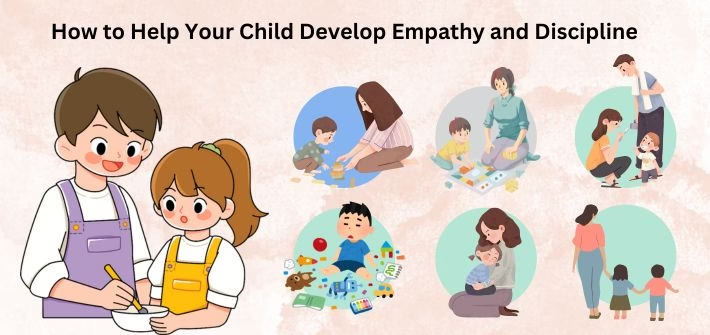
Raising children who are both compassionate and self-controlled is one of the most important goals of parenting. Empathy and discipline are not opposing forces but complementary qualities that work together to shape well-rounded individuals. When children learn to understand others’ feelings while also managing their own behavior, they develop into emotionally intelligent and responsible adults.
The foundation of empathy begins in early childhood. Children are naturally egocentric, seeing the world primarily from their own perspective. As parents, our role is to gently guide them toward recognizing that other people have feelings, needs, and experiences that matter just as much as their own.
Model Empathetic Behavior in Daily Life
Children learn more from what they observe than what they’re told. When parents consistently demonstrate empathy in their interactions, children internalize these behaviors as normal and desirable. This means showing kindness to strangers, listening attentively when others speak, and expressing concern when someone is hurting.
Make your empathetic thinking visible to your child. When you see someone struggling, verbalize your observations and feelings. Say things like, “That person looks sad. I wonder if they’re having a difficult day.” This helps children understand the thought process behind empathetic responses.
Encourage Emotional Expression and Validation
Creating a safe space for children to express their emotions is crucial for developing empathy. When children feel heard and understood, they learn to extend that same understanding to others. Avoid dismissing their feelings, even when their concerns seem trivial from an adult perspective.
Teach children to name their emotions accurately. Instead of simply saying they feel “bad,” help them distinguish between feeling sad, frustrated, angry, or disappointed. This emotional vocabulary becomes the language they’ll use to understand and communicate about others’ feelings as well.
Practice Perspective-Taking Through Stories
Books and stories are powerful tools for developing empathy. When reading together, pause to ask questions about characters’ feelings and motivations. Encourage your child to imagine how they would feel in similar situations. These conversations help children practice stepping into someone else’s shoes in a safe, guided way.
Extend this practice beyond books. When conflicts arise with siblings or friends, ask your child to consider the other person’s perspective. Questions like “How do you think your sister felt when that happened?” prompt children to think beyond their immediate reactions.
Establish Clear and Consistent Boundaries
Discipline, when done correctly, teaches children self-regulation and respect for others. Consistent boundaries help children understand that their actions have consequences and that certain behaviors are unacceptable. This structure actually supports empathy development by teaching children to consider how their actions affect others.
Explain the reasoning behind rules whenever possible. Instead of simply saying “Don’t hit,” explain that “Hitting hurts people, and we don’t want to cause pain to others.” This connects the rule to empathy and helps children understand the broader principle rather than just following blind obedience.
Use Natural Consequences When Appropriate
Allowing children to experience natural consequences teaches valuable lessons about cause and effect. If a child refuses to wear a coat, they’ll feel cold. If they don’t complete homework on time, they’ll face their teacher’s disappointment. These experiences build self-discipline more effectively than constant parental intervention.
However, natural consequences must be safe and age-appropriate. The goal is learning, not harm. When natural consequences aren’t practical, logical consequences that relate directly to the misbehavior can be equally effective in teaching responsibility and self-control.
Incorporate Them into Church Study Groups
Faith communities offer small group Bible studies literature for children to develop both empathy and discipline in supportive environments. Church Bible study groups provide structured settings where children learn alongside peers while exploring moral and ethical principles grounded in faith traditions.
These groups expose children to stories of compassion, sacrifice, and service that are central to most religious teachings. Discussing these narratives with other children and adult facilitators helps them understand empathy as not just a feeling but a deliberate choice and spiritual practice.
The regular commitment required for devotional study groups also teaches discipline. Children learn to show up consistently, prepare in advance, and participate respectfully. The group setting provides accountability that helps children develop follow-through and reliability, essential components of self-discipline.
Create Opportunities for Service and Giving
Nothing develops empathy quite like direct experience helping others. Involve your child in age-appropriate volunteer activities, whether serving meals, collecting donations, or visiting elderly neighbors. These experiences make abstract concepts like compassion and generosity tangible and real.
Start small with manageable commitments. Even young children can participate in simple acts of kindness, like making cards for hospital patients or donating toys they’ve outgrown. As they mature, gradually increase their involvement to match their growing capabilities and understanding.
Implement Family Routines and Responsibilities
Regular family routines teach children discipline through daily practice. When bedtime, mealtime, and homework time occur consistently, children develop self-regulation skills. They learn to manage their time, complete tasks without constant reminders, and understand that certain responsibilities are non-negotiable.
Assign age-appropriate chores and hold children accountable for completing them. This teaches both discipline and empathy as children recognize that their contributions help the entire family. They learn that when everyone does their part, the household runs more smoothly for everyone.
Practice Patience and Remember Development Takes Time
Developing empathy and discipline is a gradual process that unfolds over years, not weeks or months. Children will make mistakes, test boundaries, and sometimes seem to forget everything they’ve learned. This is normal and expected. Your consistent, patient guidance is what matters most in the long run.
Celebrate small victories and progress rather than expecting perfection. When your child shows empathy spontaneously or exercises self-control in a challenging situation, acknowledge and praise that behavior. Positive reinforcement encourages repetition of desired behaviors far more effectively than criticism or punishment alone.
The journey of raising empathetic and disciplined children is challenging but profoundly rewarding. By combining modeling, teaching, structured support through faith communities, and consistent practice, you provide your child with tools that will serve them throughout their lives and positively impact everyone they encounter.