
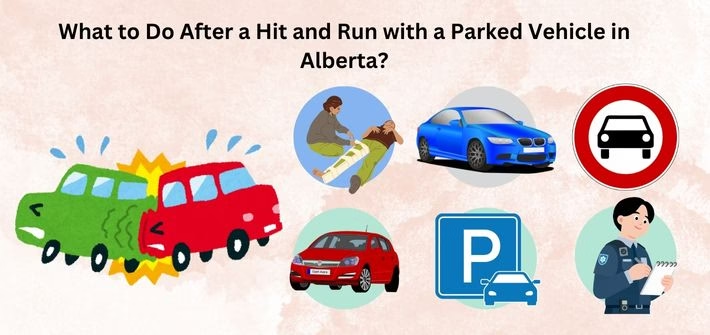
A hit-and-run incident involving a parked vehicle can be a stressful and frustrating situation, particularly in Alberta, where specific laws and guidelines regulate such incidents. Regardless of whether you go back to your car to look at its condition and see if there are any scratches or dents. Being aware of what to do, the legal ramifications, and the insurance process is essential. This article will help you understand what happens after a hit-and-run incident involving a parked vehicle in Alberta.
What Is a Hit and Run in a Parking Lot?
A hit-and-run incident in Alberta occurs when a driver damages another vehicle or property and departs the area without providing identification or offering assistance. Drivers involved in any collision, even a minor one, are required to stay at the scene or return immediately to provide information such as:
- Name
- Address
- Driver’s licence number
- Vehicle registration information
- Insurance details.
When a collision occurs involving an unattended vehicle, such as a parked vehicle, the driver is required to leave a note containing this information in a prominent position, typically on the dashboard. Even a minor collision, such as bumping bumpers or scratching a door, is considered a hit-and-run incident if the offending driver departs without leaving their information.
The law does not require visible damage for the crime to be considered; any vehicle contact is sufficient. This makes hit-and-run incidents in parking lots unexpectedly standard, as drivers tend to overestimate the seriousness of abandoning the scene.
Who Does a Hit and Run Affect?
The people affected by a hit-and-run incident involving a parked vehicle are the vehicle’s owner and the person responsible for the damage. The victim is inconvenienced by having to recover from vehicle repairs, insurance claims, and financial loss.
The offender, if caught, will face legal and financial penalties, including:
- Fines
- Demerit points
- Higher insurance premiums
Victims, including witnesses, bystanders, and other drivers, can also contribute by providing information to the police and/or insurance companies.
What Should You Do If You Find a Hit and Run?
If you return to your parked vehicle in Alberta and discover damage from a hit-and-run incident, prompt action is necessary to safeguard your rights and facilitate a resolution. These are the most important steps to follow:
Evaluate the Area and Enforce Safety
Inspect for injuries if you or anyone else is around. If the damage is severe or the vehicle is undrivable, move to a safe location and call a helpline number for assistance. Avoid standing between vehicles or in traffic to inspect damage, as this can be dangerous.
Gather Evidence
- Take clear photos of the damage to your vehicle from multiple angles, noting any paint transfer from the other vehicle.
- Document the time, date, and location of the event.
- Search for available evidence, including security cameras, traffic cameras, and dashcam video from other cars.
- If there are witnesses, obtain their contact information and testimony on what they observed.
Report the Incident to Police
In Alberta, you are required to report the hit and run to the police. If your vehicle is in running condition, go to a nearby police station and file the report. Take your driving licence, vehicle registration, and insurance information with you. The police will provide you with an Alberta Collision Report Form, which is necessary for insurance purposes and to monitor the accident. You generally have 24 hours in which to report a hit and run, so go ahead and report it quickly.
Notify Your Insurance Provider
Call your insurance provider as soon as possible and report the accident. Provide them with the police report number, photographs, and any relevant witness details. In Alberta, hits and runs in which people hit your parked vehicle are covered under Comprehensive. Collision insurance may also apply, but you will be responsible for the deductible in full unless the other driver is located.
How Are Hit-and-Run Cases Resolved?
The outcome of a hit-and-run case hinges on whether the driver who is at fault is identified:
What Happens When the Driver is Identified?
If witnesses or police manage to identify the driver, you can claim under their insurance via Direct Compensation Property Damage (DCPD), which pays for repairs without impacting your premium since you are not at fault. The perpetrator is subject to fines, three to seven demerit points, and higher insurance prices for a maximum of three years. In extreme situations, they might be charged criminally.
What If the Driver Is Not Identified? Who will pay for the compensation?
Your Collision or Comprehensive coverage will pay for repairs, less your deductible. The insurance company may cover injuries or property damage if you qualify with them. Your premium will usually not increase for a not-at-fault hit-and-run incident, but you’ll still be required to pay the deductible, unless you carry a policy with a $0 deductible.
Are there any Legal and Insurance Consequences?
Insurance providers investigate hit-and-run accidents in the same manner as other accidents, utilizing police reports, witness accounts, and evidence to determine liability. If you are a victim, cooperation with your insurer and the police will be key to an appropriate claims process. Legal recourse can be resorted to if there are injuries or if the insurance company rejects your claim.
In a Nutshell!
A hit-and-run incident involving a parked vehicle in Alberta is more than a minor problem—it’s a legal and financial issue that needs to be addressed immediately. By understanding your responsibilities, gathering evidence, reporting to the police and your insurer, and consulting with a lawyer when necessary, you can navigate the aftermath successfully. Regardless of whether the fault driver is identified, Alberta’s regulatory and insurance mechanisms provide avenues for compensation and settlement, ensuring that victims are not left to bear the entire cost of someone else’s error.