
Key Takeaways
- Rock Hill and other South Carolina communities face a growing shortage of primary care physicians.
- Rural and underserved populations are particularly impacted, with barriers to essential services and preventive care.
- Collaboration between healthcare providers, educational institutions, and policymakers is key to building a stronger primary care foundation locally.
Table of Contents
- Understanding the Primary Care Physician Shortage in Rock Hill
- Impact on Rural and Underserved Communities
- Consequences of Limited Access to Primary Care
- Efforts to Address the Shortage in Rock Hill
- The Role of Integrated Care Models
- Community Involvement and Support
- Looking Ahead: Strengthening Primary Care in South Carolina
Understanding the Primary Care Physician Shortage in Rock Hill
Across South Carolina, the shortage of primary care physicians is creating barriers to crucial health services, and Rock Hill is no exception. Primary care physicians (PCPs) form the backbone of local healthcare systems, providing everything from routine checkups to chronic disease management for families and individuals. However, rising demand, a growing and aging population, and fewer medical school graduates entering primary care have contributed to fewer doctors available for these front-line roles. Finding a female primary care physician in Rock Hill can be especially challenging for patients seeking continuity or gender-specific care preferences.
According to the South Carolina Office for Healthcare Workforce, about one-third of the state’s counties are classified as primary care shortage areas. This means patients in the Rock Hill region may face longer wait times, difficulty scheduling appointments, or even traveling to neighboring communities to access timely medical care.
Impact on Rural and Underserved Communities
Rural communities in York County and throughout South Carolina often carry a disproportionate share of this shortage. The lack of enough PCPs leads to less preventive care and forces patients to seek treatment only when illnesses are advanced. A study from the Virginia Commonwealth University found that neighborhoods with greater physician shortages, like many in the rural South, see higher rates of unchecked chronic disease and hospital admissions. For Rock Hill families, this often means increased out-of-pocket expenses and delays in getting necessary referrals, screenings, or vaccinations.
Primary care doctors play a critical role in integrating behavioral, mental, and physical health. Without this foundational care available locally, community health outcomes may suffer, and residents may turn more frequently to urgent care and emergency rooms for non-emergency issues.
The challenge is not just volume but the distribution of providers relative to population need. For more details on available providers and patient resources in the area, see Rock Hill primary care.
Consequences of Limited Access to Primary Care
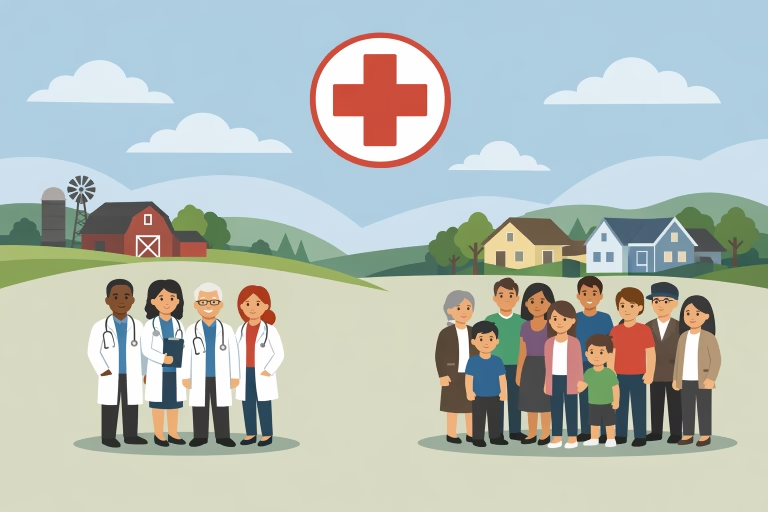
When access to primary care is limited, patients are less likely to receive early intervention for preventable diseases. This leads to higher rates of hospitalizations for conditions that could have been managed in an outpatient setting, increased emergency department visits, and more significant health disparities in chronic disease management. According to a report from The New York Times, nationwide shortages have created a “primary care bottleneck,” leaving millions in a healthcare gap.
In Rock Hill, these limitations are compounded for vulnerable populations, including low-income families and seniors who may rely on proximity and public transportation to access medical appointments. Without a regular primary care provider, essential services such as vaccinations, cancer screenings, and diabetes management often fall by the wayside.
Efforts to Address the Shortage in Rock Hill
- Expanding Residency Programs: Winthrop University and regional hospitals are working to develop partnerships that offer more residency opportunities in family medicine, encouraging new physicians to stay local after graduation.
- Financial Incentives: State loan repayment and scholarship programs are available for medical graduates who choose to practice primary care in underserved areas, providing an incentive for young doctors to remain in Rock Hill and surrounding communities.
- Policy Reforms: South Carolina government and health organizations are advocating to update reimbursement policies that better reflect the critical work PCPs perform, ensuring their services are adequately compensated and valued by insurers and healthcare systems.
In addition, telemedicine services and nurse practitioner-led clinics are being integrated into the primary care landscape to increase access. These models help address immediate gaps, especially in rural or transportation-challenged parts of York County.
The Role of Integrated Care Models
Integrated care models, like Patient-Centered Medical Homes (PCMHs), are growing in influence in Rock Hill and statewide. These models focus on coordinated care, preventive services, and strong patient-provider relationships, helping PCPs to manage more cases efficiently. By leveraging electronic health records and team-based approaches, PCMHs offer a blueprint for regions facing physician shortages. Studies by the Centers for Disease Control and Prevention highlight how integrated care can lead to improved patient outcomes, reduced hospitalizations, and a better patient experience.
Community Involvement and Support
Community engagement remains a vital pillar in overcoming provider shortages. Education programs in local schools and outreach through churches, civic groups, and community health fairs help increase awareness about the value of primary care. Supporting the growth and sustainability of local practices, especially those dedicated to underserved populations, can help keep healthcare close to home.
Health systems and non-profit organizations in Rock Hill also facilitate volunteer opportunities and support roles, enabling retired healthcare professionals or students to contribute to community clinics and outreach programs, further bolstering care capacity.
Looking Ahead: Strengthening Primary Care in South Carolina
Addressing the shortage of primary care physicians in Rock Hill represents both a challenge and an opportunity. By investing in medical education, supporting innovative care delivery models, and engaging the local community, Rock Hill can build a more resilient healthcare system for future generations. It will require collaboration between policymakers, healthcare institutions, and citizens to ensure every resident can access quality care when they need it.