
Many parents agree that with raising a teenager comes a battle between stopping them from making poor decisions and allowing them to learn from their mistakes. If you’re a parent of a teenager, you should be reassured that striking a balance between the two can be challenging.
Of course, their independence is important, and overwhelming them with rules and lectures usually only pushes them away – sometimes causing them to rebel. Every mistake is also a crucial learning experience for them, and will teach them skills they will use for the rest of their lives. So why is it so hard to let go of the reins and not get caught up in everything they’re doing wrong?
Most parents admit that trying to take control of their teens’ lives stems from feelings of fear and anxiousness. Even though they’re young adults, they can still be naive to what parents are more experienced with, and this can put them in dangerous or threatening situations. In this article, we will explore how to let your teen make mistakes and learn from them.
Establish Clear Boundaries
The first step in letting go of managing how your teen behaves is to focus on what you can control and what your responsibilities are as a parent. By this we mean setting boundaries. While it can sometimes feel like whatever you say to them goes in one ear and out the other, establishing clear boundaries outlining what you expect from them will be beneficial.
Firstly, it allows you to have more confidence in their behavior when you’re not around, simply by taking comfort from them understanding the dangers of behaving poorly. Naturally, being responsible for educating your teens on how to behave will make you feel more relaxed about the situation and may even allow you to disconnect from those thoughts while they’re out with friends.
Secondly, setting boundaries helps teens to develop discipline and understand what happens when these boundaries are crossed. It’s a significant learning opportunity for them. While no parent wishes their child breaks a promise they made or crosses a boundary you’d set, mistakes are necessary to understanding how to behave based on the rewards and punishments they receive. It’s also important for parents to only set boundaries around safety, health and morality – rather than insignificant day-to-day decisions. This will help you feel less anxious about letting go, as you will be reassured that their safety and health are always protected.
Stay Calm
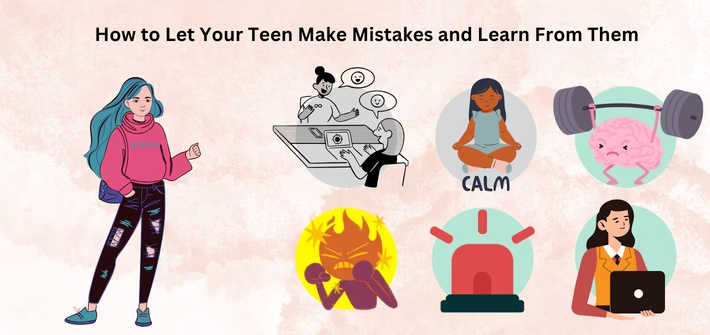
Staying calm when your child makes a mistake is often harder than accepting the mistake itself. Sometimes, it doesn’t have to be a life-threatening slip-up that causes parents to react angrily, such as when they borrow an expensive floating diamond necklace and come back empty-handed after wearing it out with friends. When a parent becomes aware of an alarming situation involving their child, it’s natural for their bodies to enter fight or flight – a state of high stress and alertness where physical changes like high blood pressure typically occur. In this state, it’s easy to become frustrated with your teen, often leading to shouting and confrontation.
When your teen is on the receiving end of your exploding anger, it’s very unlikely that they will process anything you say. Instead, they will hear a loud, frustrated voice, and immediately try to block it out. If you want to feel more comfortable with your child making mistakes, and feel confident in their ability to learn from them, staying calm and focusing on clear communication is crucial in these instances. You can certainly still communicate your frustration and disappointment without raising your voice, and talking about your upset with them composedly can be much more impactful than losing your temper.
Learning to remain calm in high-stress situations will inevitably take time to master, but techniques like meditation and deep breathing can be especially useful for parents.