
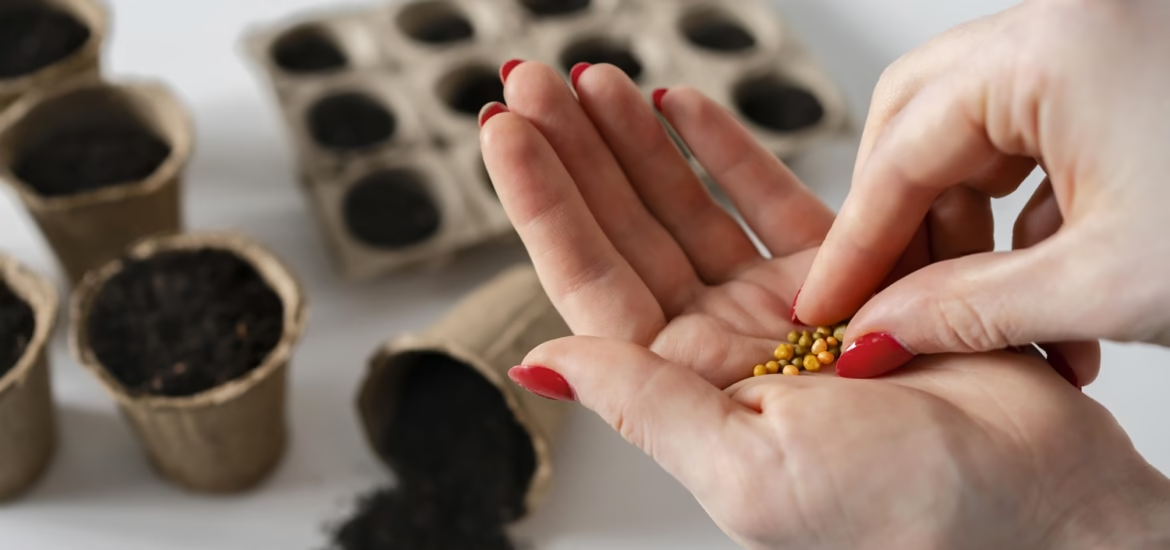
Somewhere on your daily route there is a strip of bare dirt that nobody claims. It has waited years for attention, and you could be the one who changes it.
Guerrilla gardening, the quiet practice of planting neglected public ground, sits inside the wider tradition of urban community gardening. Seed bombing is its gentlest and most creative entry point.
Where the idea comes from
In 1973, artist Liz Christy and her Green Guerillas tossed “seed grenades” into vacant lots on Manhattan’s Lower East Side. NYC Parks still documents their story.
Within a year that effort grew into the city’s first community garden, which volunteers keep alive today. A playful gesture became a movement that spread across the world.
Why planting for strangers feels so good
A 2022 study in the Journal of Experimental Psychology: General found that people who perform kind acts reliably underestimate how much those acts mean to recipients.
The researchers watched givers hand out hot chocolate in a park and small gifts in a lab. Every time, givers guessed low on how warm the moment felt.
Creativity adds its own lift. A 13-day diary study of 658 adults in the Journal of Positive Psychology showed people flourish more the day after doing something creative.
The soil itself helps too. A meta-analysis in Preventive Medicine Reports, covering 22 studies, linked gardening with measurable drops in anxiety and depression and a rise in life satisfaction.
How to make a seed bomb
A seed bomb is a dried ball of clay and compost that protects seed from hungry birds and dry spells until rain arrives. The method takes minutes.
- Pick a native wildflower mix suited to your region; the Xerces Society and local native plant societies publish reliable lists.
- Blend five parts powdered clay with three parts sifted compost.
- Fold in one part seed, adding water slowly until the mixture holds together like dough.
- Roll walnut-sized balls and let them dry for about 48 hours.
- Toss them onto bare soil before a rainy spell in early spring or autumn, when germination (the moment a seed sprouts) has the best odds.
Native mixes matter because local pollinators (bees and other insects that move pollen) recognize local flowers and depend on them.
Choose the spot with care. Aim for ground that is truly abandoned, never protected habitat or private property. Many cities even run adopt-a-spot programs that make the work official.
Small kindness projects, side by side
| Project | Startup cost | Weekly time | Payoff window |
|---|---|---|---|
| Seed-bombing a verge | Under 10 dollars per batch | About 30 minutes | Blooms in 8 to 12 weeks, lasting months |
| Kindness rocks | Around 15 dollars for paint and sealant | 1 to 2 hours | Immediate, one finder at a time |
| Community garden plot | Plot fee plus tools | 3 to 5 hours | A full growing season |
| Yarn bombing | Yarn, cost varies widely | Several hours per piece | Immediate, weeks of display |
For a busy person the numbers point one way. Seed bombing asks the least time of any option here, then keeps paying out for months along a route you already travel.
Learning from other planters
Gardeners on X trade before-and-after clips of transformed verges and recipes that actually sprout. Signal at a roadside can be weak, so many save those clips in advance.
sssTwitter, a twitter video downloader free to use in any browser, stores a tutorial on your phone as an mp4 with no account required.
Around week ten, poppies and cornflowers open beside the bus stop and strangers slow their step. They will never learn who planted them.
That anonymity is the point. The kindness research suggests the gift lands harder than you expect, and the giver walks away lighter than anyone can see.